
401(k) to Gold IRA Rollover: How to Convert a 401(k) to Gold IRA

POINTS
-
A 401(k) to gold conversion usually involves rolling retirement funds into a self-directed Gold IRA.
-
Direct rollovers are generally the easiest way to avoid taxes and early withdrawal penalties.
-
Most former employer 401(k) plans can be rolled over, but active plans may have restrictions.
-
Gold held in an IRA must meet IRS requirements and be stored in an approved depository.
-
Gold IRA rollovers often include custodian, storage, and maintenance fees.
-
Gold can diversify a retirement portfolio, but its value can fluctuate and losses are possible.
A 401(k) to Gold IRA rollover is considered when investors reassess retirement allocations under changing market conditions and interest rate environments.
The strategy reflects a reallocation within tax-advantaged accounts rather than a change in long-term retirement objectives.
Eligibility to Roll a 401(k) Into a Gold IRA
1. You Have a 401(k) From a Former Employer
If you no longer work for the company sponsoring the 401(k), you can generally roll all or part of the account into a self-directed Gold IRA.
2. Your Current Employer’s Plan Allows In-Service Rollovers
But if you’re still employed, eligibility depends on your plan rules.
Some employers allow an “in-service distribution” or rollover while you’re still working.
3. You Are Age 59½ or Older
Many plans that permit in-service rollovers only do so after you reach age 59½.
4. You Open a Self-Directed Gold IRA
A standard IRA typically cannot directly hold physical precious metals.
To receive a 401(k) rollover intended for physical gold, you generally need a self-directed IRA with a qualified custodian.
5. You Use a Direct Rollover
Eligibility for a tax-free rollover is strongest when funds move directly from the 401(k) administrator to the new IRA custodian.
6. Gold Meets IRS Standards
Only certain gold products qualify for retirement accounts.
The metals must meet IRS purity requirements and other eligibility rules.
7. The Gold Will Be Stored by an Approved Custodian
To remain eligible, IRA-owned gold must be held in an approved depository or by a qualified custodian.
Personal possession generally disqualifies the arrangement and may trigger taxes and penalties.
8. Any Required Minimum Distribution (RMD) Has Been Handled First
If you’re subject to RMD rules, the RMD portion generally cannot be rolled over. Any remaining eligible balance may still qualify for rollover.
How Can I Transfer My 401(k) to Gold Without Penalty
| Way | What Happens | Taxes | Penalties |
|---|---|---|---|
| Direct rollover | Money moves straight from 401(k) to Gold IRA | No tax | No penalty |
| Indirect rollover | Money goes to you first, then you deposit it | No tax if done right | Penalty if rules are broken |
| Indirect rollover with withholding | You receive less money because 20% is withheld | Tax if you don’t replace withheld amount | Penalty risk if late |
| Traditional 401(k) → Traditional IRA → Gold IRA | Two-step transfer between retirement accounts | No tax if both transfers are direct | No penalty if done correctly |
| Roth conversion | Move 401(k) money into Roth Gold IRA | You pay income tax | No penalty if rules followed |
| Cash withdrawal | Take money out and reinvest yourself | Fully taxable | 10% penalty if under 59½ |
In a direct rollover, the 401(k) provider sends the money straight to the new IRA custodian.
The funds never pass through your hands, so there is no current tax event and no early-withdrawal penalty.
For most people, the direct rollover is the simpler and safer route.
How to Convert 401(k) to Gold IRA: Step-By-Step Tutorials
Step 1. Open a Self-Directed Gold IRA
First, you open a self-directed Gold IRA with an approved custodian that allows precious metals.
You complete the application, submit basic ID, and name beneficiaries.
Step 2. Choose Custodian + Initiate Rollover
Select your custodian and request a direct rollover from your 401(k) plan.
Provide your IRA account details so funds move directly between institutions without you taking possession.
Step 3. Complete 401(k) Transfer Paperwork
Your 401(k) provider processes the request and issues the funds to your IRA custodian.
4. Receive Funds in the IRA
Once approved, the 401(k) sends cash directly to your IRA custodian.
Because it’s a direct rollover, there are no taxes or withholding if executed correctly.
5. Buy IRS-Approved Precious Metals
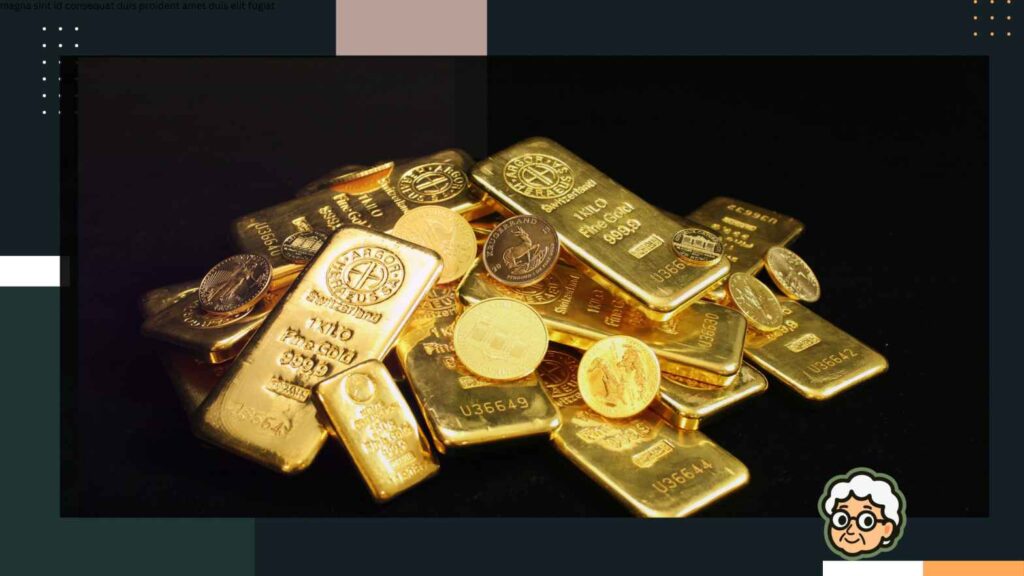
You instruct the custodian to purchase eligible metals such as
- gold
- silver
- platinum, or
- palladium that meets IRS purity rules.
The custodian executes the trade on your behalf.
6. Store Metals in an Approved Depository
Purchased metals are shipped directly to an IRS-approved storage facility.
You choose between segregated or commingled storage, and the assets remain held there for the life of the IRA.
What Metals are Allowed?
The IRS does not let a Gold IRA hold just anything shiny.
Approved metals generally must meet purity standards.
| Metal | Minimum Purity Requirement |
|---|---|
| Gold | 99.5% (0.995) |
| Silver | 99.9% (0.999) |
| Platinum | 99.95% (0.9995) |
| Palladium | 99.95% (0.9995) |
That means collectible coins, rare coins, and non-approved bullion are not allowed. If the metal does not meet IRS standards, the IRA can be disqualified.
Sample Rollover Request Letter
Here is a demo letter you can send to your 401(k) plan administrator.
Should I Convert My 401(k) to Gold
A 401(k) is already built for long-term growth. It’s usually
- stocks
- index funds,
- maybe bonds.
It is meant to compound over time. Gold doesn’t really grow the same way.
So if you’re asking, “Should I convert it all to gold?”
I’d straight up say no.
But, if you say Should I add gold as a hedge?
I’d say yeah, maybe, but a small portion only. Gold can do well in certain periods, but it can also sit flat for years. And during those same years, stocks are usually compounding in the background.
Gold IRAs got custodians, storage fees, and spreads.
So, yes, a 401(k) to Gold IRA rollover can make sense if you want diversification and are comfortable paying for physical metal storage and lower liquidity
Gold IRA Rollover FAQs
A direct trustee-to-trustee rollover is not taxable. Funds move directly between custodians, so no withholding or early withdrawal penalty applies.
Yes. You may roll over all or part of a distribution. Any amount not rolled over is treated as taxable income and may be subject to a 10% penalty if under age 59½.
RMDs cannot be rolled over. Once you reach RMD age (typically 73 or older), the required amount must be withdrawn in cash. In a Gold IRA, this may require selling metals.
Only IRS-approved metals are allowed. Eligible gold must meet IRS purity standards, such as 99.5% bullion coins like American Gold Eagles or Canadian Maple Leafs. Collectibles are not permitted.
No. IRA metals must be held by an approved custodian in an IRS-approved depository. Personal storage is treated as a taxable distribution.
No. It refers to transferring retirement funds into an IRA that holds physical gold. The rollover follows standard IRS rules for retirement account transfers.
IRA-to-IRA rollovers are limited to one per 12-month period. Trustee-to-trustee transfers and 401(k)-to-IRA rollovers are not subject to this limit.
The distribution becomes taxable income and may incur a 10% penalty if under age 59½. The IRS may grant exceptions in limited cases.
Yes. Federal IRS rules apply broadly, but individual plans and states may impose additional requirements. Plan documents should be reviewed before rolling over.




One Comment