
What Is a Good Return on a 401k? Average Rates & Benchmarks

A 401(k)’s return is determined by the performance of the investments held in the account.
Over time, those investment gains and losses can materially affect the value of retirement savings.
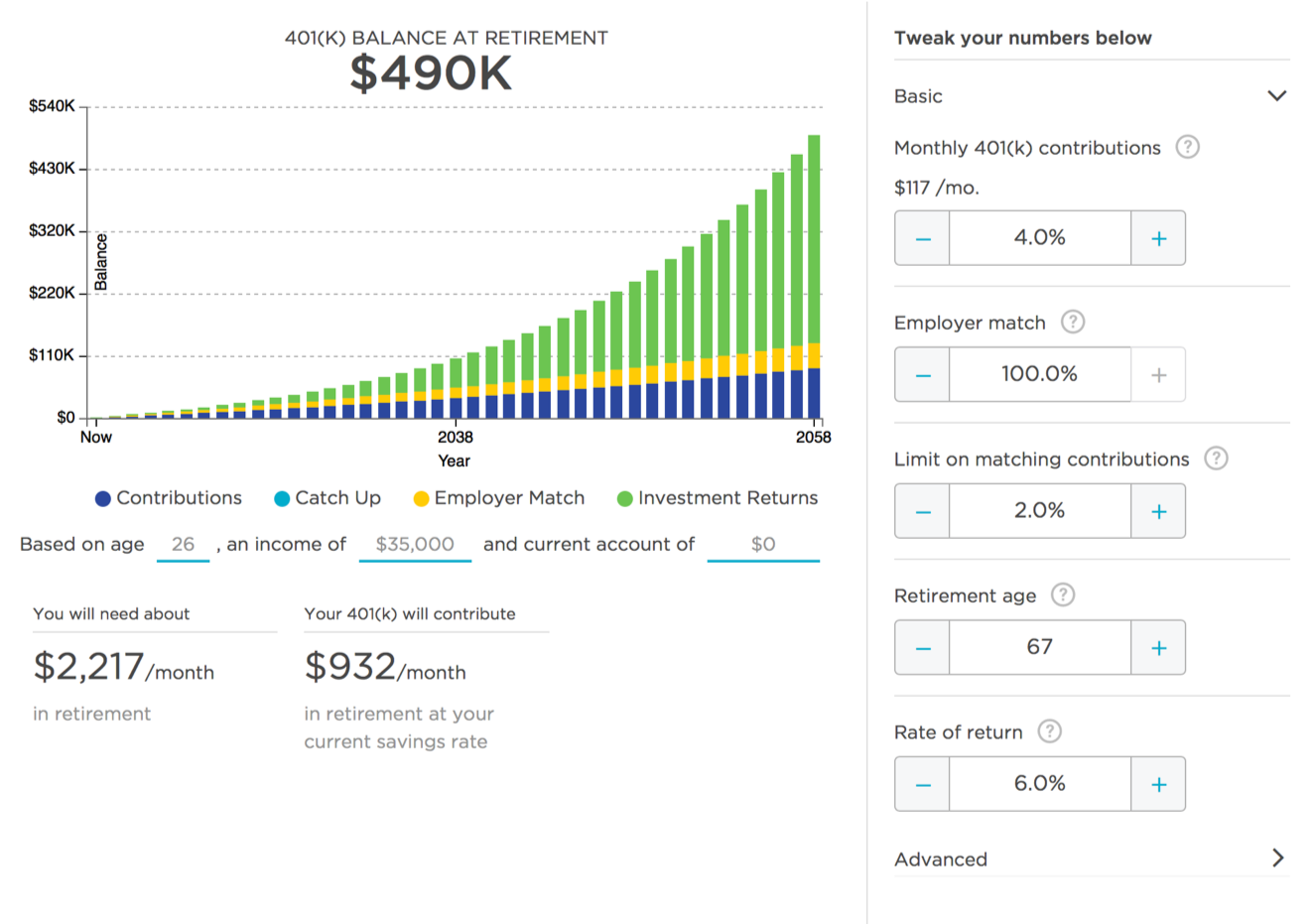
What Is a Good Return on a 401(k)?
A good return on a 401(k) depends on what you’re invested in and how long you’re measuring it.
Good
401(k) RETURN
Your return only means something next to a benchmark — here’s how common portfolios and Vanguard’s target-date funds stack up.
S&P 500 is a 100% stock benchmark — useful as a ceiling, not a fair comparison for a diversified plan.
Target-date funds shift toward bonds as the year approaches — a lower long-run return is by design, not underperformance.
For long-term diversified U.S. stock investments, Investor.gov cites 7%–10% as a useful historical annual return estimate. Actual 401(k) returns vary according to the investments selected, fees, risk level, and market conditions.
| Benchmark/Portfolio | 1-year (2025) |
5-year (2021–25) |
10-year (2016–25) |
20-year (2006–25) |
30-year (1996–2025) |
|---|---|---|---|---|---|
| S&P 500 (total return) | +15–18% | 14.4% | 14.8% | 11.0% | 10.4% |
| 60% Stocks / 40% Bonds (U.S.) | ~+10% (estimated) |
~7–9% (est.) |
~8% (est.) |
~9–10% | ~9–10% |
| Vanguard Target Date 2045 | +8–12% (depending) |
8.90% |
11.03% (target-date 2060) |
– | – |
| Vanguard Target Date 2030 | +4–8% (depending) |
6.41% | 8.66% | – | – |
Will Your 401(k) Keep Growing After Retirement?
Find out how your 401(k) can continue growing after you retire, and what can affect your savings over time.
See How It GrowsWhat Determines Whether Your 401(k) Return Is Good?
Several key factors determine your actual 401(k) returns:
1. Asset Allocation
The mix of stocks, bonds, and other assets dominates returns.
Stocks offer higher potential growth (hence higher returns over time), while bonds/cash provide stability (lower returns).
Retirement Transition Portfolio
Illustrative glide-path ranges, not a personal recommendation — the right mix depends on your time horizon, risk tolerance, and spending needs. SOURCE: VANGUARD GLIDE-PATH BENCHMARKS
2. Fees and Expenses
Even a seemingly small fee difference can have a large effect over decades. As an example, consider a 30-year investment period with a 7.0% gross annual return:
| Annual Fee | Net Return | Value After 30 Years* | Wealth Lost vs. 0% |
|---|---|---|---|
| 0.00% | 7.00% | $7,612 | $0 |
| 0.50% | 6.50% | $6,848 | $764 |
| 1.00% | 6.00% | $6,022 | $1,590 |
| 1.50% | 5.50% | $5,285 | $2,327 |
| 2.00% | 5.00% | $4,698 | $2,914 |
Assumptions: $1,000 invested, 30 years of compounding, no additional contributions. Lifetime Fees approximated as the difference in ending value.
3. Employer Match
A generous company match is free money that boosts returns.
It effectively provides an immediate return on contributions.
| Assumption | With Employer Match | Without Employer Match |
|---|---|---|
| Annual salary | $80,000 | $80,000 |
| Your 401(k) contribution | 6% | 6% |
| Your annual contribution | $4,800 | $4,800 |
| Employer match | 50% of your contribution | None |
| Employer annual contribution | $2,400 | $0 |
| Total invested each year | $7,200 | $4,800 |
| Investment return | 7% | 7% |
| Salary growth | 3% | 3% |
| Time horizon | 30 years | 30 years |
4. Vesting
If your match vests over time, leaving the job too early may forfeit part of the match, effectively reducing your return.
A fully vested match is best for maximizing returns.
5. Rebalancing
Periodic rebalancing can also improve returns by enforcing discipline.
If you don't rebalance, it lets winning assets dominate, which may raise risk without raising expected return.
- Tax Treatment: Traditional 401(k) growth is tax-deferred; you’ll pay income tax on withdrawals. Roth 401(k) grows tax-free.
- Market Cycles: Sequence of returns can matter for retirees. But long-term savers should focus on average expected returns.
How to Tell If Your 401(k) Is Underperforming
To judge if your 401(k) is underperforming, compare to relevant benchmarks and peers:
| Check | What to Look At | Warning Sign |
|---|---|---|
| 1 |
Benchmark Compare your fund with its appropriate benchmark. |
Consistently trails the benchmark |
| 2 |
Long-Term Return Look at 5- and 10-year returns, not just 1 year. |
Underperforms for several years |
| 3 |
Fees Check the fund's expense ratio and other fees. |
High fees without better results |
| 4 |
Similar Funds Compare with funds in the same category. |
Bottom-quartile performance over 3–5 years |
| 5 |
Risk & Allocation Make sure you're comparing investments with similar risk and asset mix. |
Comparing a bond-heavy portfolio with the S&P 500 |
| 6 |
Index Tracking For an index fund, compare its return with the index it tracks. |
Large, persistent gap from the index |
Should Your 401(k) Beat the S&P 500?
A 401(k) doesn’t need to beat the S&P 500.
If it includes
- Bonds
- International stocks, or
- Other assets, lower returns can reflect intentional diversification and reduced risk.
Compare your 401(k) with a benchmark matching its asset allocation, not automatically the S&P 500.
What Return Should You Expect as You Get Older?
Younger investors generally hold a higher percentage of stocks, providing greater long-term growth potential but also greater volatility.
As retirement approaches, the allocation gradually shifts toward bonds and other fixed-income investments to reduce risk and protect accumulated savings.
401(k) Growth FAQ
Yes, you should consider real returns because they show how much your purchasing power grows after inflation.
No, your balance growth also includes contributions, so it does not show your actual investment return.
Annually is usually sufficient for a long-term investor, with an additional review after a major market move.
No, trying to time a market crash rarely works, although you may want more cash or bonds if you'll need the money soon.
Yes, target-date funds typically have blended benchmarks that reflect their mix of stocks and bonds.
No, you don't need to beat your peers; focus on how your fund performs against an appropriate benchmark and whether it consistently falls behind.
Yes, after-tax returns matter because traditional and Roth 401(k)s are taxed differently.
You should consider risk alongside return, since a higher return may not be better if it comes with substantially more volatility.
The examples assume typical inflation, market returns, employer matches, contributions, and other conditions where specific data were not provided.
References:






3 Comments