
Does Social Security Disability Count as Income for Food Stamps? Eligibility & Income Rules

SNAP eligibility is based partly on a household’s income and expenses.
Social Security disability benefits can affect the income used in that calculation.
Households with a disabled member may also qualify for deductions that reduce their net income for SNAP purposes.
Can Retired Seniors Get Food Stamps?
Find out how retirement income, Social Security, pensions, savings and household expenses can affect SNAP eligibility for older adults.
Check Your SNAP Options
SSDI’s Effect on SNAP Eligibility by State
SSDI households skip SNAP’s gross-income test everywhere, BBCE adoption and asset-limit rules are what actually differ by state
Hover or tap a state to see details
SSDI as SNAP Income
Yes, SSDI is counted as unearned income in SNAP.
SSDI is technically counted as unearned income, so it is fully counted in gross income.
There is no special exclusion or disregard for SSDI, unlike SSI or certain veteran benefits.
Example
For example, if John receives $1,400 in SSDI, that $1,400 counts toward his SNAP household income for the month.
SSDI is counted as income for SNAP, just like unemployment or pension benefits.
Can Seniors on Social Security Get Food Stamps?
See how Social Security income affects SNAP eligibility, including income limits, deductions, and rules for households with seniors.
Check SNAP EligibilityCan You Get SNAP While on SSDI?
Yes, being on SSDI does not bar you from SNAP.
They are separate programs.
Many SSDI recipients also get SNAP.
SSDI does not count as a disqualifying factor by itself.
So, even if you receive SSDI, you are eligible for SNAP because SSDI is usually limited and SNAP targets low-income households.
How SSDI Affects SNAP Eligibility
| SNAP Rule | What It Means | Example |
|---|---|---|
| SSDI Income | SSDI counts as income for SNAP. | John gets $1,400 SSDI → $1,400 is counted. |
| Gross-Income Test | A household with a qualifying disabled member generally does not have to pass the federal gross-income test. | John is disabled and gets SSDI → the 130% gross-income test generally doesn’t apply. |
| Net-Income Test | Still applies. SNAP looks at income after allowable deductions. | John has $1,400 income, then allowable deductions reduce the amount used for the net-income test. |
| Deductions | Certain expenses can reduce countable income. | An eligible medical or shelter expense may reduce John’s countable net income. |
| Assets | Households with an elderly or disabled member can have a higher federal resource limit. | A disabled household may have more savings/resources than a household without an elderly or disabled member. |
| State Rules | States may have more generous rules, so results can differ. | John’s state may use different income or asset rules than the federal baseline. |
SSDI is treated like any unearned income.
A household’s eligibility is first checked against gross and net income limits.
Crucially, households with an elderly or disabled member, which includes anyone receiving SSDI, are exempt from the gross-income test.
In practice, this means only the net income limit applies. If a disabled household’s net income is at or below these amounts, it qualifies.
| What to check | FY2027 rule | Example |
|---|---|---|
| 1. Net income | Must be ≤ 100% of poverty after SNAP deductions | 1 person: $1,330/mo · 3 people: $2,277/mo |
| 2. Gross income | Usually not a limit when a household member is elderly/disabled | Normal 130% limit does not apply |
| 3. Deductions | Subtract allowable deductions before checking net income | Medical, shelter, dependent care, etc. |
| 4. Assets | Federal limit is higher for elderly/disabled households | $4,750 federally; many states waive/raise this |
| 5. State rules | States may use BBCE to change income/asset rules | Check your state’s SNAP rules |
What Day Will Your Disability Check Be Deposited?
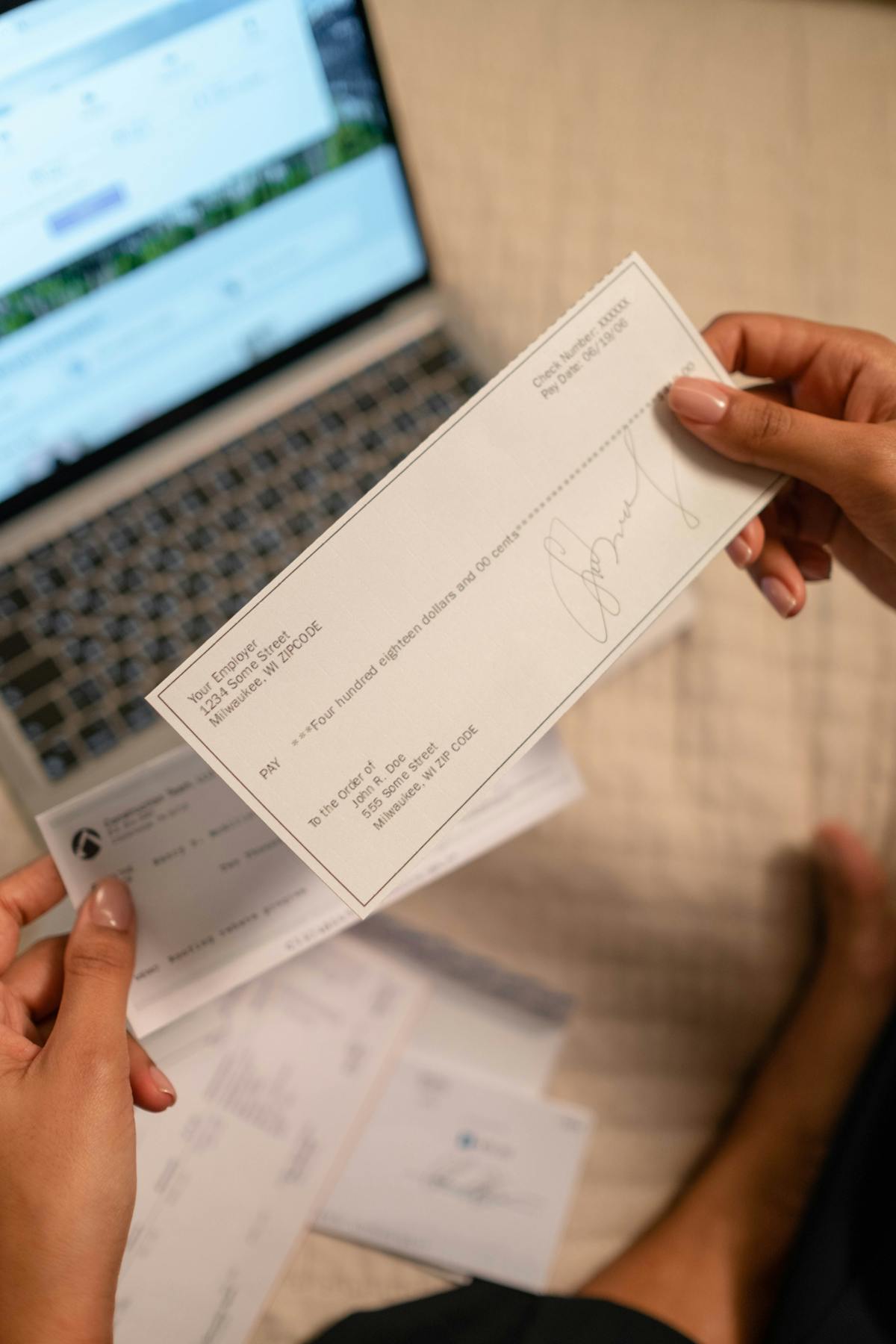
Find out when disability payments are scheduled to be deposited this month and see the dates you may expect your Social Security check.
SNAP Deductions for Disabled Households
Disabled and elderly households get all standard SNAP deductions plus special ones:
| Deduction | What You Can Deduct | Example |
|---|---|---|
| Standard | Basic deduction available to SNAP households. | $217/month for 1–3 people in FY2027 |
| Earned Income | 20% of wages from work. | Earn $1,000 → $200 deducted |
| Dependent Care | Qualifying care costs needed so someone can work, attend school, or training. | Child or incapacitated-adult care |
| Medical | Qualifying out-of-pocket medical costs over $35/month. | $215 medical costs → $180 deducted |
| Shelter | Qualifying housing costs that exceed 50% of income after other deductions. | Rent + utilities can substantially lower countable income |
| Homeless Shelter | A special shelter deduction may apply to qualifying homeless households. | $205.66/month in FY2027 |
| Utilities | A state-approved utility allowance may be used for eligible utilities. | Electricity, gas, water, etc. |
| Other Expenses | Certain qualifying expenses, such as legally owed child support, may also be deductible. | Payments made to someone outside the household |
By the way, all deductions require verification.
States typically require receipts or bills for medical expenses or a signed declaration of recurring costs.
- Medicare/insurance statements
- Prescription receipts
- Utility bills
- Rent/mortgage statements
- Pay stubs are used to verify deductions.
How Much Can You Get in SSDI and Still Qualify for SNAP?
Let’s follow an exampl illustrating how much SSDI one could receive and still qualify for SNAP, for
- Single-person household and
- Three-person household (one disabled adult + two family members).
We are also gonna use the latest SNAP limits and assume no other income.
Single-Person Household (Disabled)
- Net income limit: $1,330/month.
- Standard deduction: $217.
- No earned income, no dependents.
- Medical deduction, if any: costs above $35 count.
- Shelter deduction: assume rent $700, utilities $100, so $800 total. (Half of net would be subtracted from this.)
| Example | SSDI | Std. Ded. | Medical | Net Income | Net Limit | Eligible? |
|---|---|---|---|---|---|---|
| A. Lower SSDI | $1,500 | −$217 | $0 | $1,283 | $1,330 | Yes |
| B. Higher SSDI | $1,600 | −$217 | $0 | $1,383 | $1,330 | No |
| C. With Medicare | $1,600 | −$217 | −$65* | $1,318 | $1,330 | Yes |
Three-Person Household (1 disabled adult + 2 dependents)
- Net income limit: $2,277/month.
- Standard deduction: $217 (for 1–3 people).
- Shelter and other allowances: assume $800 rent + $150 utilities = $950 housing.
- Medical deduction: again, expenses above $35.
| Example | SSDI | Std. Ded. | Medical | Net | Limit | Eligible? |
|---|---|---|---|---|---|---|
| A | $2,200 | −$217 | $0 | $1,983 | $2,277 | Yes |
| B | $2,500 | −$217 | $0 | $2,283 | $2,277 | No |
| C | $2,500 | −$217 | −$100* | $2,183 | $2,277 | Yes |
SSDI and SNAP FAQ
No. Receiving SSDI does not automatically end SNAP, although the SSDI payment may count as income when determining your SNAP eligibility.
No. SNAP benefits do not reduce your SSDI payment or affect your SSDI eligibility.
You should report the lump-sum payment to your state SNAP agency because special SNAP rules determine how retroactive SSDI payments are counted.
SNAP asset limits vary by state, and many states allow higher limits or have no asset limit under broad-based categorical eligibility.
Provide proof of qualifying out-of-pocket medical expenses to your SNAP agency when you apply or recertify.
You can generally verify them with documents such as a lease, rent receipts, mortgage statements, or utility bills.
Yes. Children who live with you and meet SNAP household rules are generally included in your SNAP household.
You should report both benefits because SNAP may treat SSDI and SSI differently when determining your eligibility.
Generally, no. Your tax filing status does not determine SNAP eligibility, which is based primarily on your household income, deductions, and applicable resource rules.
References:





2 Comments