
Does Afterpay Require a Down Payment? When You Pay $0 vs. Upfront

With Afterpay, do you have to pay anything upfront, or can you get your order now and make your first payment later?
Ummm… it kinda depends on where you live, what you’re buying, and whether your account qualifies for Afterpay’s special No Payment Upfront feature.
Most Afterpay Pay in 4 purchases require you to pay the first 25% at checkout.
But eligible customers in Australia, New Zealand, and certain US Cash App accounts may be able to place an order with $0 due today.
How the Afterpay Down Payment Works

Pay the first installment.
With Pay in 4, about 25% of your order is due at checkout. Afterpay’s US agreement calls it a down payment.
The rest is charged automatically.
The remaining three payments are typically taken every two weeks.
Your purchase is paid off.
On a $200 order: $50 at checkout, then $50 at weeks 2, 4 and 6.
Does Afterpay Require a Down Payment?
Yes, Afterpay normally requires an upfront payment.
With its standard Pay in 4 plan, you split your purchase into four installments.
You pay the first installment (usually around 25% of the order) when you check out.
The remaining three payments are then charged automatically, typically every two weeks.
For example, let’s say you buy something for $200.
Your payment schedule would generally look like this:
- First payment: $50 at checkout
- Second payment: $50 two weeks later
- Third payment: $50 four weeks later
- Fourth payment: $50 six weeks later
After those four payments, your purchase is paid off.
Afterpay’s US Installment Agreement actually calls the first payment a down payment. It must be paid before the purchase is completed.
Keep in mind that some orders may require a larger first payment. This can happen if your purchase is close to or above your available Afterpay spending limit. The checkout screen should show you the amount due before you confirm the order.
Can You Go to Jail for Not Paying Afterpay?
Find out what can happen if you miss Afterpay payments, whether unpaid balances can lead to legal action, and what options you have.
Check Your Options →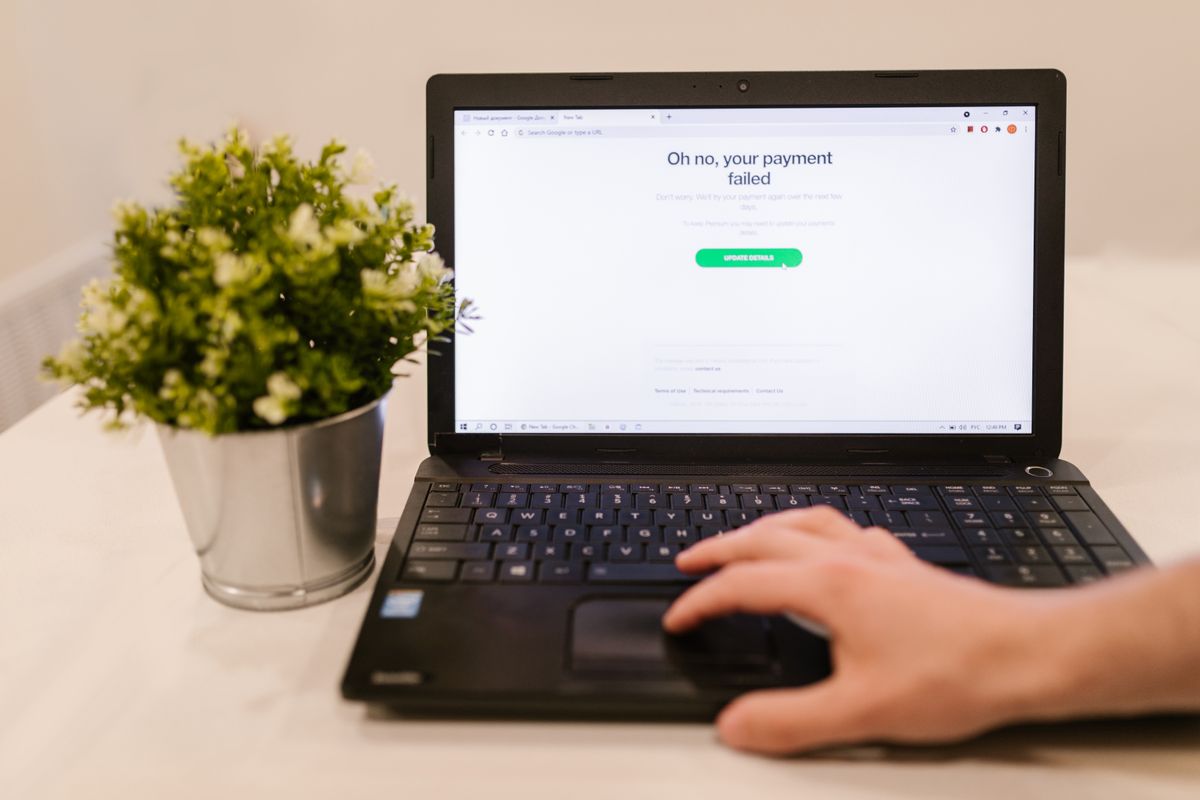
Can You Use Afterpay With No Payment Upfront?
Yes, Afterpay offers a No Payment Upfront feature that lets eligible customers pay $0 at checkout on qualifying purchases.
But only if you qualify tho.
Instead of paying the first 25% immediately, eligible customers can check out with $0 due today.
Their first installment is then delayed until approximately 8–14 days after the purchase.
Who Qualifies for the No Payment Upfront Feature?
Afterpay doesn’t automatically give every customer access to the $0 upfront option.
To qualify, Afterpay considers:
- Account age: How long you’ve used Afterpay.
- Payment history: Consistent on-time payments.
- Purchase frequency: How often you place Afterpay orders.
- Order amount: Purchases must be under $400.
- Purchase type: Gift cards, single-use payments, and Pay Monthly orders are excluded.
Note: The exact limits and age are not made public.
You don’t need to apply separately. The feature may become available automatically when Afterpay determines that your account qualifies.
When Is Your First Afterpay Payment Due?
Well, it depends on your country and whether you have access to the no-upfront feature.
| Country or service | When the first payment is due |
|---|---|
| United States (standard Pay in 4) | At checkout |
| United States (eligible Cash App Afterpay purchases) | May be deferred |
| Australia (standard Pay in 4) | At checkout |
| Australia (eligible no-upfront purchases) | Approximately 8–14 days later |
| New Zealand (standard Pay in 4) | At checkout |
| New Zealand (eligible no-upfront purchases) | Approximately 8–14 days later |
| United Kingdom (Clearpay) | At checkout |
Once the first payment is made, the remaining Pay in 4 installments are generally charged every two weeks.
If you’ve selected a preferred payment day, the schedule may be adjusted. Depending on the market, the first scheduled payment can fall 8–14 days after the order date, or 15–21 days in California.
By the way, Afterpay sends a confirmation email showing your payment schedule when your order is approved.
Does Afterpay Check Your Available Balance Before Approving a Purchase?
Yes, every Afterpay purchase is subject to approval.
Before approving an order, Afterpay considers your available spending limit and whether it can collect the required payment.
For a standard Pay in 4 purchase, you generally need enough available funds to cover the first installment. If that payment cannot be collected, your order may be declined.
Afterpay may still perform a pre-authorization.
For that reason, it advises some customers to keep at least 25% of the purchase amount available when using the no-upfront option.
For example, if you’re buying something for $200, you may still need to have $50 available even though the checkout screen shows $0 due today.
What Happens If Your First Afterpay Payment Fails?
Whether it’s the first instalment or one of your later payments, if you miss a payment, it can have some issues.
Suppose you place an order but don’t have enough money in your debit or credit card account when Afterpay tries to collect the payment.
Afterpay may treat this as a missed payment.
Here’s what can happen:
- You receive payment reminders. Afterpay may send notifications asking you to pay the outstanding amount.
- You may be charged a late fee. The amount depends on your country and the value of your order.
- Your account may be paused. You may not be able to make new Afterpay purchases while the payment remains overdue.
- Your available spending limit may be reduced. Missing payments can affect how much Afterpay allows you to spend.
- Your payment history may be affected. In Australia and New Zealand, missed payments may be reported to credit bureaus, depending on the applicable reporting rules.
Does Afterpay Charge Interest or Late Fees?
The standard Pay in 4 plan is interest-free when you make your payments on time.
You don’t pay interest simply for splitting your purchase into four installments. But missing a scheduled payment can result in a late fee.
The exact fee depends on where you live.
| Country | Interest | Initial Late Fee | Additional Late Fee | Maximum Late Fees |
|---|---|---|---|---|
| United States | No interest | Around $10 for orders of $40 or more | $7 if unpaid after 7 days | Lower of 25% of the order value or $68 |
| Australia | No interest | Around $10 for orders of $40 or more | $7 if unpaid after 7 days | Lower of 25% of the order value or $68 |
| New Zealand | No interest | Around $10 for orders of $40 or more | $7 if unpaid after 7 days | Lower of 25% of the order value or $68 |
| United Kingdom (Clearpay) | No interest | £6 per missed installment | Another £6 if unpaid after 7 days | £6 for orders under £24; otherwise, up to £24 or 25% of the order value |
Before placing an order, check the payment breakdown at checkout. It will show whether you need to pay anything immediately and when your remaining installments are due.
Because Afterpay and Clearpay rules can change, I recommend checking the official help page for your country before relying on a particular payment option.
References: